

Indoor Playgrounds vs. Trampoline Parks: Which Is Better for Young Children?
You search for an “indoor playground near me,” hoping to find the perfect spot to let your child burn off some energy. Two options likely dominate your screen: a colorful soft play indoor playground and a high-energy trampoline park. Both promise active fun, but as a parent, your evaluation goes deeper. You’re looking for a place that is not only engaging but also safe and developmentally enriching for your young child.
So, which is the better choice?
While trampoline parks offer a thrilling experience for older kids and teens, the evidence overwhelmingly points to indoor playgrounds as the superior option for children under eight. This isn’t just an opinion—it’s a conclusion rooted in expert safety guidance, child development principles, and a design philosophy built around the specific needs of growing bodies and minds.
Let’s break down why a well-designed indoor play area for kids is the smarter, safer, and more beneficial choice for your family.
Safety First: Why Indoor Playgrounds Are the Safer Choice for Young Kids
When it comes to your child, nothing is more important than their safety. This is the single most critical factor where indoor playgrounds and trampoline parks diverge, especially for toddlers and young children.
The most telling piece of evidence comes from the American Academy of Pediatrics (AAP). Citing the high risk of fractures, sprains, and head trauma, the AAP officially discourages recreational trampoline use for young children, particularly those under the age of six. The danger isn't just from falling off; it's the physics of the trampoline itself. When multiple children jump, the person weighing less is susceptible to being launched unexpectedly, and awkward landings can put immense stress on developing bones and joints.
Indoor playgrounds, by contrast, are engineered from the ground up with the safety of this exact age group in mind. Their "Safety DNA" includes:
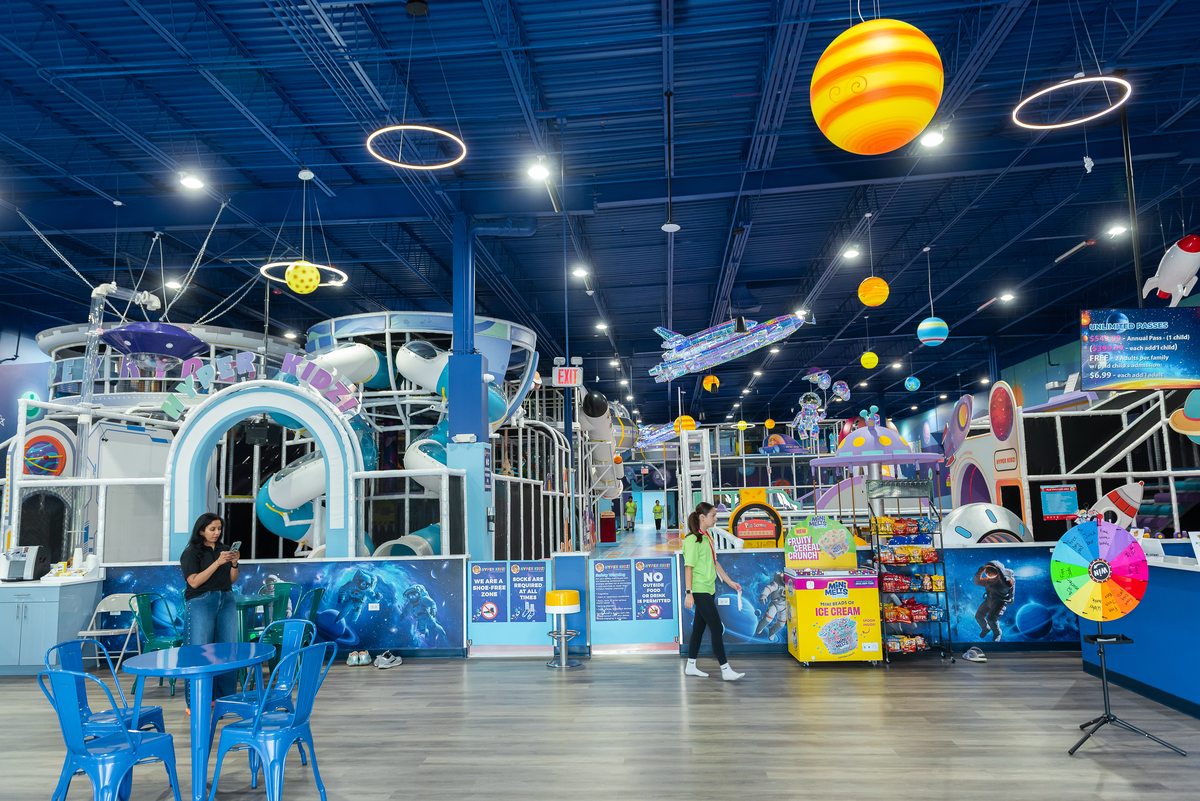
- Age-Specific Zones: Places like Hyper Kidz feature separate, dedicated areas for toddlers, younger children, and older kids. This simple but crucial design element prevents accidental collisions between a curious toddler and an energetic ten-year-old.
- Impact-Absorbing Surfaces: The entire environment is built with soft materials. From padded floors and foam-cushioned equipment to rounded corners, every surface is designed to absorb the impact of the inevitable tumbles that come with active play.
- Controlled Heights: Structures are built to age-appropriate heights, minimizing the risk associated with falls. This contrasts sharply with the high-flying nature of trampolines.
- Clear Sightlines: A well-designed indoor play place allows parents to easily supervise their children from comfortable seating areas, providing peace of mind without hovering.
At a glance: Indoor playgrounds provide safer, ASTM-standardized environments for young children, while trampoline parks present higher injury risks, especially for toddlers, as emphasized by pediatric experts.
Beyond Bouncing: Developmental Benefits Compared
Burning energy is great, but true play does so much more. It builds brains, strengthens bodies, and teaches social skills. This is where the variety offered by an indoor playground provides a much richer developmental experience.
A trampoline park primarily offers one type of repetitive, high-impact gross motor activity. While beneficial for cardiovascular health, it’s a narrow slice of the developmental pie.
An indoor playground is a multi-sensory environment that nurtures holistic growth:
- Gross Motor Skills: Children climb, crawl, slide, and navigate obstacle courses, improving balance, coordination, and strength in a variety of ways.
- Fine Motor Skills: Interacting with smaller play elements, gripping climbing structures, and maneuvering through tight spaces hones the precise movements essential for writing and other detailed tasks.
- Cognitive Development: Navigating a multi-level play structure is a problem-solving exercise. Children develop spatial awareness, plan their routes, and think critically as they decide where to go next.
- Social and Emotional Growth: Unlike the solitary nature of jumping on a trampoline, indoor playgrounds are inherently social. Kids learn to take turns on the slide, cooperate to build with soft blocks, and engage in imaginative play, laying the foundation for emotional intelligence and communication.
At Hyper Kidz, every structure is designed to be a screen-free tool for learning and growth, making our safe play places an ideal venue for everyday kids activities that support well-rounded development.
Indoor playgrounds nurture all aspects of a child’s growth, from creativity to coordination, while trampoline parks mainly support physical fitness—key for parents prioritizing holistic development.
Parent Peace of Mind: The Unspoken Deciding Factor
A family outing should be enjoyable for everyone, including you. The parent experience at an indoor playground is fundamentally different—and far less stressful—than at a trampoline park.
Trampoline parks are often loud, chaotic, and require your constant, high-alert supervision to prevent accidents. It can be difficult to relax when you’re worried about collisions or injuries.
Indoor playgrounds are designed for a more relaxed family experience. You can settle into a comfortable chair, enjoy a coffee, and watch your child explore a secure, contained environment. The clear sightlines and age-zoned areas mean you can supervise effectively without feeling like you need to be an arm's length away at all times. This creates a stress-free atmosphere where you can connect with other parents or simply enjoy watching the pure joy of your child at play.
A Smarter Investment in Fun and Value
From a practical standpoint, indoor playgrounds often deliver better value. Many, like Hyper Kidz, offer unlimited playtime for a flat entry fee. This allows children to warm up, take breaks, and play at their own pace without you having to watch the clock. Trampoline parks typically charge by the hour, which can add up quickly and create pressure to maximize every minute.
This value extends to events. If you're searching for "kids birthday party places near me," an indoor playground is far more inclusive. It can safely entertain a wide range of ages, from toddlers to older siblings, ensuring every guest has a great time. This makes it a one-stop solution when you need to celebrate a memorable birthday party or plan field trips and group events for a diverse group.
The Verdict: The Clear Choice for Young Children
While a trampoline park might be a good option for a 13-year-old seeking a high-intensity thrill, the choice for parents of young children is clear.
An indoor playground is the superior environment for fostering safe, holistic, and joyful play. It aligns with expert safety recommendations, supports a wider range of developmental milestones, and provides a more relaxing and valuable experience for the entire family.
When you choose a children’s play center like Hyper Kidz, you’re not just choosing a place to play. You’re choosing a partner in your child’s healthy development—an environment built with their well-being as the absolute first priority.
Frequently Asked Questions
Q: Are trampolines ever safe for toddlers?
A: According to the American Academy of Pediatrics (AAP), no. Due to the risk of fractures and head injuries on still-developing bodies, they strongly advise against recreational trampoline use for children under six years old.
Q: What is the best age for a trampoline park?
A: Trampoline parks are generally better suited for older, more coordinated children, typically ages nine and up. At this age, they have better body control and spatial awareness, though risks still exist.
Q: Are indoor playgrounds clean and hygienic?
A: Reputable indoor playgrounds prioritize cleanliness. At Hyper Kidz, we adhere to rigorous cleaning and sanitization protocols throughout the day to ensure a healthy and safe environment for all our guests.
Q: My kids are of different ages. Can they play together?
A: Absolutely. This is a key advantage of indoor playgrounds. Hyper Kidz features distinct play zones designed for different age groups, so your toddler can explore safely in one area while your older child challenges themselves in another, all within the same facility.